June

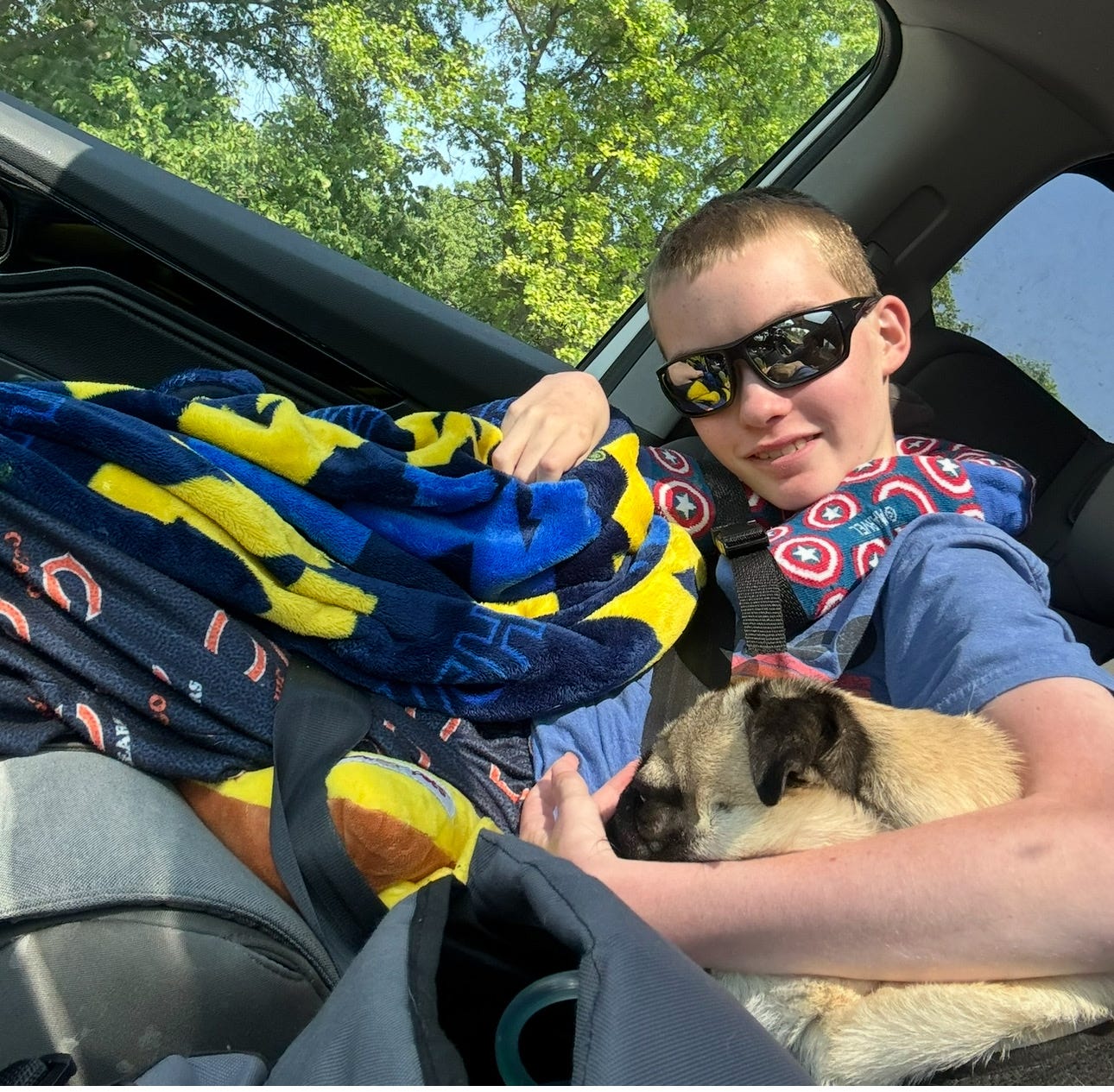
On June 11, Brady had a terrible day. It was the culmination of a terrible week, which had been the culmination of a terrible month. His muscles were tight. Everything hurt. He could not get comfortable. His GI system was a hot mess that we could not seem to get evened out. He was exhausted.
Brady hadn’t spoken since March of 2022, when we had finally weaned him off of Sinemet, the medication that for a time had kept him moving and speaking. At first, Sinemet had seemed like a miracle, and then slowly lost its efficacy and left Brady with only small, precious windows of function. But then the side effects worsened and worsened. Eventually, it became so problematic that we knew he had to come off it.
After a brutal four-month wean, he was finally free of the drug. The tradeoff was losing the short windows where he could speak, move and eat. It was a heavy cost, but the gift was stability, which we had not seen in years.
Still, we missed his voice.
Brady had been off all medications since that terrible Sinemet wean, and I didn’t miss the stupid little yellow pills or their side effects. But his discomfort was growing. His body was tight, restless, and full of effort. So we decided to try Baclofen, a medication meant to help with tone and spasticity.
We had used it before with some success. My lingering concern, always, was his metabolism. Brady’s body didn’t process or clear things in the usual way; every decision about medication felt like walking an unusually dangerous tightrope. But that week, he was so uncomfortable. We had few options left, and he needed relief.
We started Baclofen on June 11. We gave him three doses that day, and by the third, I was ready to throw the bottle away. That evening, he had a terrible full-body spasm. It was the kind we hadn’t seen in years. It scared him and it scared me. He cried. I cried. I went to bed feeling defeated, wondering if we had made the wrong decision to try Baclofen again, and made everything worse instead of better.
The next morning, I brought him downstairs and settled him into his rocker. He drifted back to sleep for several hours.
We always talked to Brady like anyone else in the house. And we always called him Goose. Everyone who loved him called him Goose.
When he woke up, I said, “Good morning, Goose! How are you feeling?”
And he said, “Good.”
I looked at Sloane in disbelief.
“You’re feeling good?” I asked.
He said, “I’m feeling good.”
I said, “Oh my goodness, Goose, I love you!”
And he said, “I love you too.”
I said, “Brady, you’re talking—do you realize you’re talking?”
He laughed. “Yeah. I do”
Suddenly, he wasn’t just talking. He was moving. His arms, his legs, his back, his neck: all seemed to answer to him again. He was conversational. Present.
I called my husband home from work immediately, and the four of us spent the morning listening to his voice, watching his movements. We mostly sat in stunned silence, soaking in our miracle moment.
One of the most remarkable things was that there wasn’t a backlog of things to say. Because we had always found ways to communicate, there wasn’t much to catch up on. We just enjoyed the moment of victory.
Brady wanted to throw a ball for the dogs and pet Bucky Waffles, his beloved pug, by himself. Watching him rub Bucky’s ears between his fingers, steady and deliberate, was one of the most beautiful things I’ve ever seen. Pugs have coarse fur, but their ears are soft like a lamb’s tail, and he sat there stroking them and staring at Bucky.
He wanted a popsicle, and ate a rainbow Jonny Pop. He drank some water. He was goofy and lighthearted in the way Goose had always been. He kissed a SpongeBob pillow to make his sisters laugh. He wanted to try standing. He was curious about what his body could do.
He didn’t want to go anywhere. He just wanted to sit, talk and laugh and exist among us. It felt surreal.
When my husband came racing home, racing into the driveway, slamming the door behind him to see Brady, my son laughed and said, “Someone needs to calm Dad down.”
Some of his words were jumbled, and some came out as gibberish. His cognition seemed stable but younger than I had anticipated, maybe closer to 13 than 17. But he was happy. He laughed and celebrated. His voice had grown deeper with age. We had long celebrated his one chest hair, which he had proudly named Bob, but a deep voice was a new milestone.
For the first time in a long time, I felt wind in my sails, the same sails that had felt torn the night before. For a few hours, I let myself believe this was momentum. That maybe, finally, it was a step toward recovery instead of decline.
But like every medication before it, the window closed. Slowly, the words disappeared again. The movement faded.
Some days he’d have flashes. A few words, a few sips of water, a popsicle, a moment of movement. The inconsistency was, in a way, consistent with the strange rhythm of the past decade.
Over time, the Baclofen caused such severe constipation that we stopped it altogether, only to realize he did seem to do slightly better while on it. We resolved the constipation, adjusted the dose, and started again.
His voice never came back the way it had that first day. But he kept one word. Ma. However, my nickname wasn’t his final word.
The night before he died, Brady had fallen asleep in his chair while his sisters and I watched a show. I looked over and saw a huge smile spread across his face. It was so bright, so wide, that I said to the girls, “Look at that smile! What on earth could he be dreaming about?”
And then he whispered, with each perfectly clear word stretched out, in absolute wonder:
“Oh… wow.”
I’ve replayed that moment in my mind a thousand times since his death. The radiant smile, his quiet awe. I like to think it was his first glimpse of heaven.
It is amazing the bond between dog and man, or in this case Brady. I loved reading about how much he protected and loved Brady.